 Skip to content
by The Real Clean Living
www.therealcleanliving.com
This post contains affiliate links. If you purchase through my links I may earn a small commission at no extra cost to you.
When we started the GAPS protocol for our boys’ food allergies, I became borderline obsessed with gut health. Probiotics were the first thing everyone told me about — take this supplement, eat that yogurt, add these capsules to everything. And we did. We went all in on probiotics.
But here’s what nobody told me back then: probiotics are only part of the equation. What those good bacteria produce inside your gut — the byproducts of their work — that’s where the real magic happens. And those byproducts? They’re called postbiotics.
I stumbled onto this concept while researching why the GAPS protocol emphasizes fermented foods so heavily. It wasn’t just about getting live bacteria into the gut. It was about what those bacteria produce. That was my lightbulb moment.
So let me break this down for you the way I wish someone had broken it down for me — no confusion, no jargon overload, just real talk about what postbiotics are, why they matter, and how to actually get more of them into your family’s diet.
What Are Postbiotics, Exactly?
You’ve probably heard of probiotics (the live good bacteria) and prebiotics (the fiber that feeds them). Postbiotics are the third piece of the puzzle — and honestly, they might be the most important one.
Postbiotics are the bioactive compounds that probiotics produce as they do their job. Think of it like this: prebiotics are the food, probiotics are the workers, and postbiotics are what the workers actually build. They’re the end product. The finished goods.
Technically, the International Scientific Association for Probiotics and Prebiotics (ISAPP) defines postbiotics as “a preparation of inanimate microorganisms and/or their components that confers a health benefit on the host.” But in real-people language? They’re the beneficial stuff that comes from bacterial activity — things like short-chain fatty acids, enzymes, antimicrobial peptides, vitamins, and organic acids.
And here’s the part that really got me: postbiotics don’t need the bacteria to be alive to work. That’s a huge deal, because it means you can get benefits even from heat-treated or shelf-stable fermented foods. It also means postbiotics tend to be more stable and predictable than live probiotics, which can be finicky little things.
Why Postbiotics Matter More Than You Think
When I was deep in researching the GAPS protocol, I thought if I could just get enough good bacteria into my boys, everything would fall into place. And probiotics helped — don’t get me wrong. But I was missing the bigger picture.
Your gut doesn’t just need good bacteria living in it. It needs what those bacteria produce. That’s what actually:
- Strengthens your gut lining (goodbye, leaky gut)
- Reduces inflammation throughout your body
- Supports your immune system — and about 70% of your immune system lives in your gut
- Helps your body absorb nutrients from food
- Produces vitamins your body needs, like B vitamins and vitamin K
- Creates short-chain fatty acids (SCFAs) like butyrate, which is basically fuel for the cells lining your colon
Butyrate alone is worth talking about. It’s one of the most studied postbiotics, and the research on it is pretty incredible. It helps maintain the integrity of the gut barrier, reduces inflammation, and may even play a role in preventing colon cancer. And the best part? Your body makes it naturally when gut bacteria ferment fiber. You don’t need a fancy supplement — you need real food.
This is why I keep coming back to the same message: you can’t supplement your way out of a bad diet. Your gut bacteria need the right fuel to produce the right postbiotics. And that fuel comes from what you eat.
Postbiotics vs. Probiotics: Why Food Beats Supplements
I’m not anti-supplement. There’s a time and place for a good quality probiotic. But here’s what the research keeps showing: food-first always wins.
When you eat fermented foods, you’re not just getting live bacteria. You’re getting the postbiotics those bacteria already produced during fermentation. It’s a two-for-one deal. A probiotic supplement gives you live bacteria and hopes they survive your stomach acid and set up shop. Fermented food gives you the bacteria AND the beneficial compounds they’ve already made.
Plus, fermented foods come with their own nutrients, enzymes, and flavor profiles that work synergistically. A capsule can’t replicate that. Your gut knows the difference.
This doesn’t mean throw your probiotics in the trash. It means stop relying on them as your entire gut health strategy. The real power move is building a diet that naturally supports postbiotic production every single day.
The Best Postbiotic-Rich Foods to Know About
Here’s the practical part — the fermented foods that are naturally packed with postbiotics. These are foods we actually use in our house. No obscure ingredients, no health-food-store-only items. Just real foods you can find, make, or swap into your family’s routine.
Sauerkraut
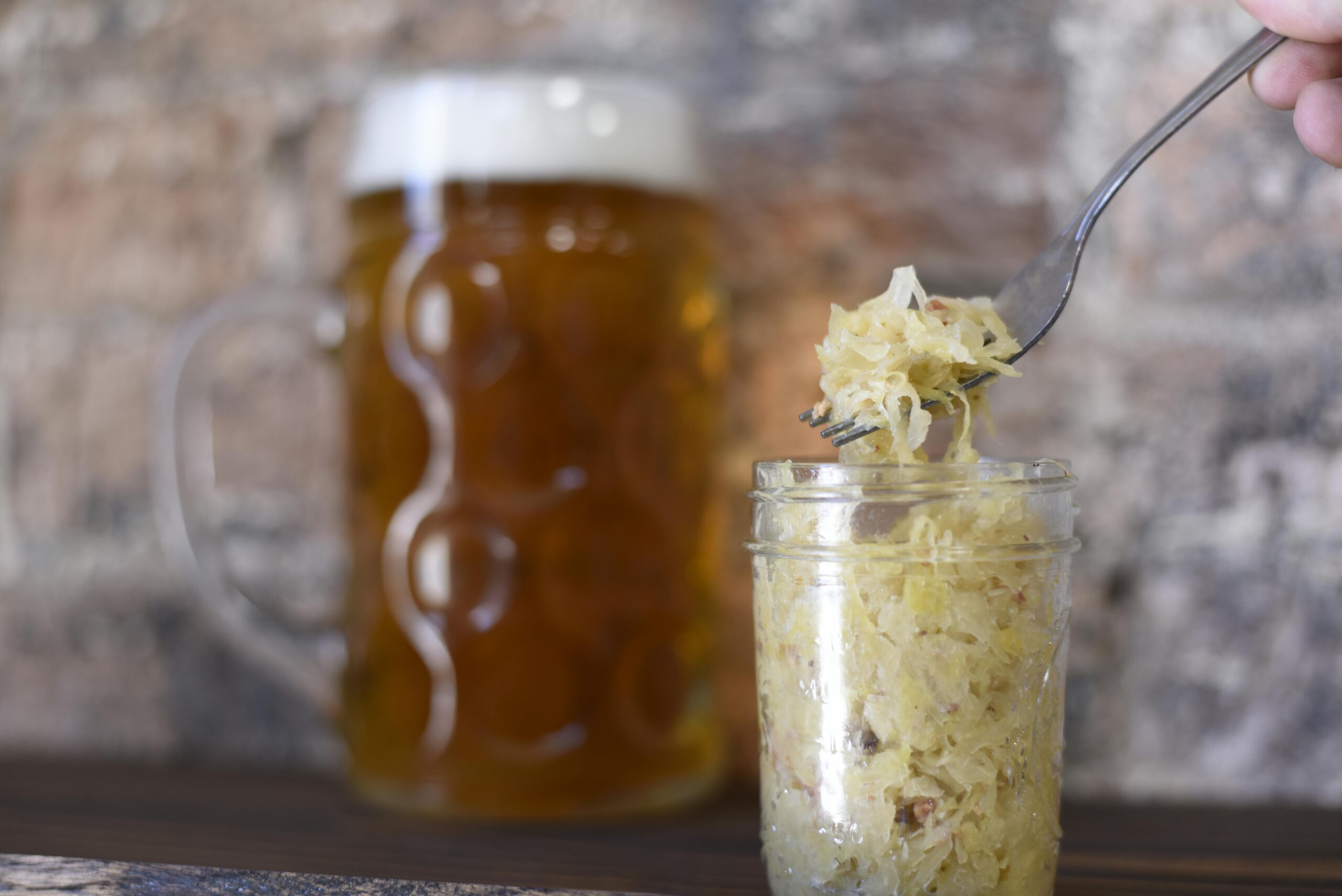
Raw, unpasteurized sauerkraut is loaded with postbiotics. The key word is raw — the stuff in a can on the regular grocery shelf has been heat-treated, which kills the live bacteria. Look for it in the refrigerated section, or better yet, make your own. We make ours at home — it’s literally cabbage and salt. Even a forkful as a side dish counts. I have a full post on making homemade sauerkraut if you want the step-by-step.
Kefir
Kefir is like yogurt’s more powerful cousin. It has a wider variety of bacterial strains and produces a ton of postbiotic compounds during fermentation. We use it in smoothies almost daily — the boys don’t even notice it’s in there. It also works great over granola or straight up. If dairy is an issue, coconut kefir or water kefir are solid alternatives. I wrote a whole post on homemade kefir and why it’s one of the easiest daily probiotics you can make at home.
Kombucha
Kombucha has been around forever, and there’s a reason it keeps gaining popularity. The fermentation process produces organic acids and other postbiotic compounds. Just watch the sugar content on some store-bought brands — some of them are basically soda with a health label.
Kimchi
If your family can handle a little spice, kimchi is a postbiotic powerhouse. It’s fermented vegetables with a kick. It goes great in rice bowls, with eggs, or honestly anything that needs some flavor. The fermentation process here is especially rich in producing beneficial organic acids.
Yogurt (The Real Kind)
Not the sugar-loaded cups with cartoon characters on them. Plain, full-fat yogurt with live active cultures. The simpler the ingredient list, the better. Flip it over and read the label — if it has more than a handful of ingredients, keep looking.
Miso
Miso paste is fermented soybeans, and it’s an incredible source of postbiotics. It works well in soups, marinades, and salad dressings. Just don’t boil it — add it at the end of cooking to preserve the good stuff.
Meat Stock (Not Bone Broth — There’s a Difference)
If you’re working on gut healing, meat stock is the real foundation — not bone broth. A lot of people use the terms interchangeably, but they’re not the same thing. Meat stock is cooked for a shorter time with joints and meat still on the bone, which makes it gentler on a healing gut and richer in gelatin and amino acids that actually help seal the gut lining. Bone broth, cooked much longer, can be high in free glutamates and histamines, which can actually irritate a damaged gut. Meat stock was a cornerstone of the GAPS protocol for our family. I have a full post breaking down gut-healing chicken broth and why it’s not the same as bone broth.
How to Start Getting More Postbiotics Into Your Family’s Diet
If you’re reading this thinking “my family will never eat sauerkraut,” don’t worry. You don’t have to overhaul everything overnight. Here are some easy entry points:
- Start with one fermented food. Just one. Kefir in a smoothie is how we started — it’s the easiest entry point because it blends right in and doesn’t taste “weird” to kids.
- Try a forkful of sauerkraut or kimchi as a side. Not a whole serving — literally a forkful. Consistency matters more than quantity.
- Swap regular yogurt for plain, full-fat yogurt with live cultures. Add your own fruit or honey to sweeten it.
- Try kombucha as an afternoon drink instead of juice or soda. Kids often love the fizz.
- Cook with miso. A tablespoon in a soup or marinade adds flavor and postbiotics without anyone knowing it’s there.
- Add meat stock into your rotation. It’s the gut-healing foundation that supports everything else — and it’s not the same as bone broth.
The 80/20 rule applies here too, mamas. You don’t need to ferment everything in your kitchen. You just need to consistently include some of these foods in your family’s routine. Small, steady changes compound over time.
The Bottom Line on Postbiotics
Postbiotics are what your gut bacteria are working so hard to produce. They’re the reason probiotics matter in the first place. And the most reliable, most affordable, most delicious way to get more of them is through real, fermented food.
You don’t need a new supplement. You don’t need a complicated protocol. You need fermented foods in your fridge and the understanding that your gut is an ecosystem — not a pill bottle.
Learning about postbiotics was one of those moments in our GAPS journey where everything clicked into a bigger picture. The protocol wasn’t just about flooding the gut with good bacteria — it was about creating the conditions for those bacteria to do their job and produce the compounds that actually heal.
If you’re just starting your gut health journey, start here. If you’ve been at it for a while and something still feels off, this might be the missing piece.
Drop a comment and tell me — have you tried any of these fermented foods? What’s worked for your family? I’d love to hear.
This article is for informational purposes only and is not intended as medical advice. Always consult with your healthcare provider before starting any supplement, especially for children or if you are pregnant, nursing, or taking medications. The Real Clean Living is not responsible for any actions taken based on the information provided.
Ready to clean up your kitchen, bathroom, and cleaning cabinet — without the overwhelm? Our Clean Living Bundle gives you the cheat sheets and week-by-week guide to swap out the worst offenders at your own pace. No guilt, no perfection required — just real progress. [Get the Bundle]
Real Food. Clean Products. No Confusion.