 Skip to content
The Real Clean Living
This post contains affiliate links. If you purchase through my links I may earn a small commission at no extra cost to you.
More probiotic strains than yogurt, less effort than you’d believe
If I could only recommend one fermented food to a mama just starting her clean living journey, it would be kefir. Not sauerkraut. Not kombucha. Kefir. And I say that as someone who makes all of those things.
Kefir is one of the easiest ferments you can make, and it’s packed with amazing probiotics — more strains and more diversity than yogurt. I make it every single day. It takes me about two minutes of actual hands-on time. And every morning, it goes straight into our family’s smoothies. It’s become such a non-negotiable part of our routine that it honestly feels weird if I skip a day.
If you’ve been wanting to get more real, living probiotics into your family’s diet without adding a complicated new project to your plate, this is it. Let me walk you through exactly how I do it.
What Is Kefir and Why Is It So Good for You?
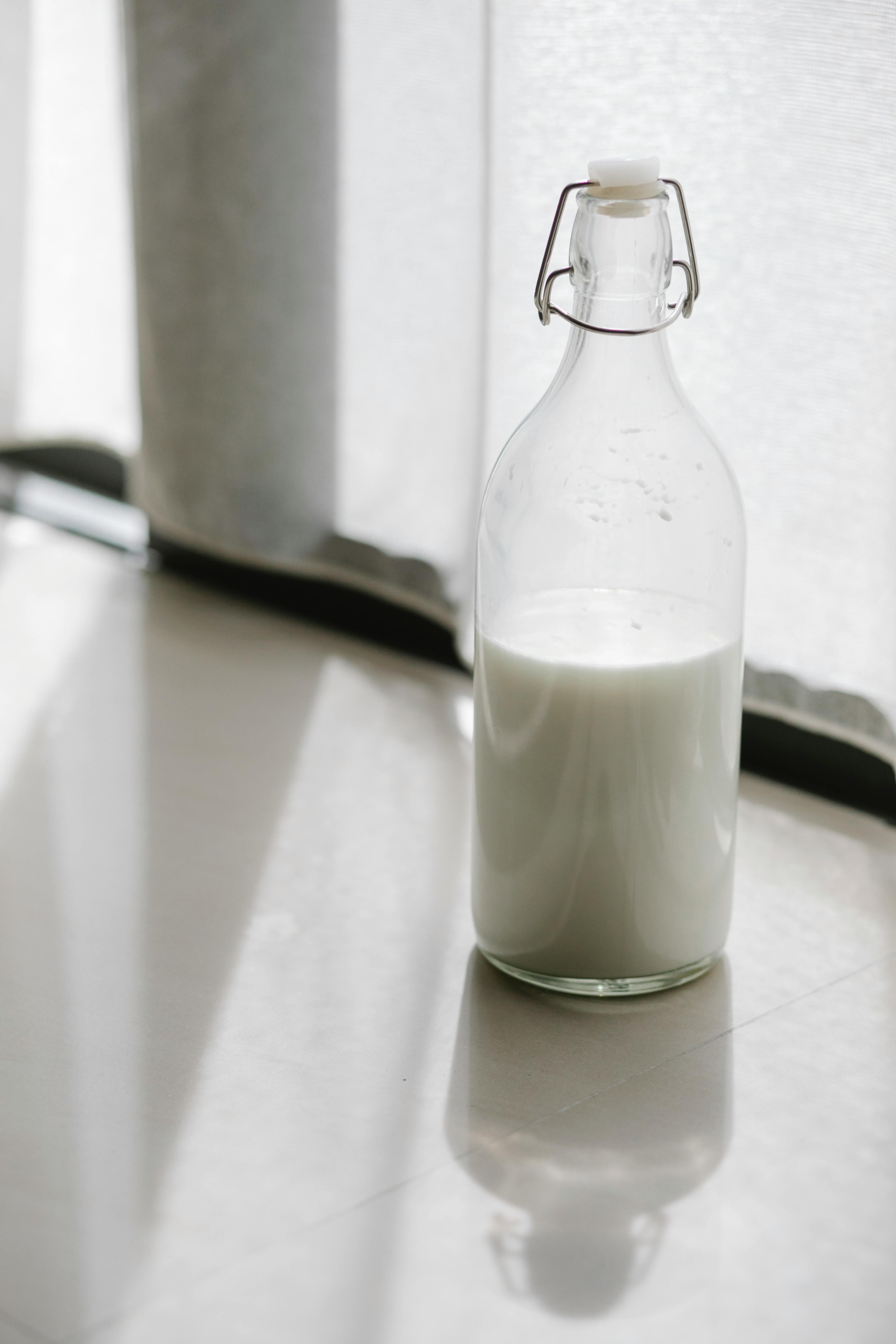
Kefir is a fermented milk drink that’s been around for centuries. It’s made by adding kefir grains — which aren’t actually grains at all, but small, rubbery clusters of beneficial bacteria and yeast — to milk. The grains ferment the milk over about 24 hours, and what you’re left with is a tangy, slightly thick probiotic drink that’s absolutely loaded with good bacteria.
Here’s what makes kefir stand out:
- More probiotic strains than yogurt. Yogurt typically contains a handful of bacterial strains. Kefir can contain 30 or more different strains of beneficial bacteria and yeast. That diversity is what your gut is really after.
- Easier to digest. The fermentation process partially breaks down the lactose in milk, which makes kefir much easier on sensitive stomachs than regular dairy.
- Supports immune function. A healthy gut is the foundation of a strong immune system. The probiotics in kefir help keep your gut microbiome balanced, which has a ripple effect on everything from digestion to mood to how well your body fights off illness.
- Rich in nutrients. Kefir is a natural source of calcium, B vitamins, and protein. When made with raw milk, the nutritional benefits are even more incredible because you’re getting those nutrients in their most bioavailable form.
What You’ll Need to Get Started
The supply list for kefir is almost laughably short.
- Kefir grains. You’ll need to buy these before you start. You can find them online or sometimes from local fermentation groups. Once you have them, they last indefinitely — they actually grow and multiply every time you make a batch, so this is a one-time purchase.
- Milk. I use raw milk, but regular whole pasteurized milk works just as well. Just make sure it’s not ultra-pasteurized. UHT (ultra-high temperature) milk has been heated so aggressively that the grains won’t thrive in it. A lot of organic store milk is actually UHT even if it doesn’t say it clearly on the front, so check the label. Also avoid lactose-free milk — the grains need lactose to survive. Most conventional whole milk at the grocery store is perfectly fine.
- A glass jar (a wide-mouth mason jar works great)
- A paper towel and rubber band for covering
- A plastic strainer (not metal — more on this below)
Important: No metal touches the kefir grains. Use a plastic strainer and a wooden or plastic spoon. Kefir grains don’t like metal, and it can damage them over time. This is one of the very few times I’ll recommend plastic over glass or stainless steel.
How to Make Kefir: Step by Step
Step 1: Add Grains to Milk
Place your kefir grains in a clean glass jar and pour milk over them. The general ratio is a few tablespoons of grains per 12 ounces of milk. If you’re just starting out and don’t have that many grains yet, simply use less milk. Each time you make a batch, the grains grow, so you’ll work your way up to the full ratio over time.
Step 2: Cover and Ferment
Cover the jar with a paper towel and secure it with a rubber band. Set it on the counter out of direct sunlight and let it sit for about 24 hours. That’s it. No stirring, no checking, no fussing. Just leave it alone and let the grains do their thing.
Step 3: Strain the Grains
After 24 hours, pour the contents of the jar through a plastic strainer into a clean bowl or jar. The liquid that passes through is your finished kefir — ready to drink or use. The grains stay in the strainer. Transfer those grains into a fresh clean jar, add more milk, cover, and start the whole process again. You’re literally doing this every day, and it takes about two minutes.
Fermentation Time and Thickness
Twenty-four hours is the sweet spot for most kitchens, but temperature matters. In the summer when your house is warmer, kefir ferments faster and can get quite thick and tangy in less time. In the winter, it may need a little longer. You’ll learn to read it over time.
If your kefir is thin and still tastes mostly like milk, your grain-to-milk ratio is probably too high — meaning too much milk for the amount of grains you have. Use less milk until your grains grow and multiply enough to handle more. I also recommend using whole milk, as it produces a thicker, creamier kefir than low-fat or skim. If it’s very thick, separating into curds and whey, and smells intensely sour, it’s gone a bit too long. Neither is ruined — the over-fermented kefir is still perfectly safe to drink, it’s just more sour. Adjust your timing or ratio for the next batch.
How to Store Kefir and Keep Your Grains Alive
Once your kefir is strained, you can drink it right away or store it in the refrigerator. It’ll keep in the fridge for a week or more, and the flavor actually continues to develop as it sits.
As for the grains — if you’re making kefir daily, just keep the cycle going: strain, add fresh milk, ferment, repeat. The grains stay happy as long as they’re being fed regularly.
If you need to take a break, place the grains in a clean jar, cover them with fresh milk, put a hard lid on the jar, and store it in the refrigerator. The cold slows the fermentation way down, so the grains go into a kind of hibernation. I wouldn’t let this go longer than about a week without pulling them out and giving them fresh milk. When you’re ready to start again, just take them out, add fresh milk, and let them ferment on the counter as usual. They may take a batch or two to get back up to full strength.
How We Use Kefir Every Day
Smoothies are our go-to. Every morning, kefir goes into the blender with fruit and a little honey. It’s a delicious, probiotic-packed way to start the day, and the kids love it. They don’t even think of it as a “health food” — it’s just breakfast.
Beyond smoothies, you can drink it straight if you like the tangy flavor, pour it over granola, use it as a base for overnight oats, or add it to salad dressings. Some people even use it in baking as a buttermilk substitute. It’s incredibly versatile.
A Note on Raw Milk
We use raw milk for our kefir, and if you have access to clean, quality raw milk, the gut health benefits are even more incredible. Raw milk retains all of its natural enzymes and beneficial bacteria, and when you ferment it into kefir, you’re creating something truly powerful. That said, regular whole pasteurized milk makes excellent kefir too. Don’t let the perfect be the enemy of the good — just start making it with whatever clean milk you have access to.
Just Start
Kefir is one of those things that sounds more complicated than it actually is. Once you get into the rhythm — strain, add milk, wait, repeat — it becomes second nature. Two minutes a day for a constant supply of one of the most probiotic-rich foods on the planet. That’s a trade I’ll take every time.
Order some grains, grab a jar, and give it a try. Your gut will thank you.
This article is for informational purposes only and is not intended as medical advice. Always consult with your healthcare provider before starting any supplement, especially for children or if you are pregnant, nursing, or taking medications. The Real Clean Living is not responsible for any actions taken based on the information provided.
Ready to clean up your kitchen, bathroom, and cleaning cabinet — without the overwhelm? Our Clean Living Bundle gives you the cheat sheets and week-by-week guide to swap out the worst offenders at your own pace. No guilt, no perfection required — just real progress. [Get the Bundle]
Real Food. Clean Products. No Confusion.