 Skip to content
(You Don’t Have to Wait on the FDA)
by The Real Clean Living
www.therealcleanliving.com
Last week, the FDA announced that roughly thirty-five percent of major US food brands have agreed to drop artificial dyes ahead of the end-of-2026 phaseout deadline. Walmart. Hershey. Nestlé. The list is growing every week.
Good news. Slow news.
Because if you’ve got a kid with allergies, eczema, sensory issues, or a gut that’s been working overtime since the day they were born, you don’t have two years to wait for the rest of the food industry to catch up.
I started reading labels when my oldest was a baby — not because I was some “clean eating” mom or because I had any of this figured out. I started because my boys were reacting to things and I couldn’t figure out what was triggering them. So I did what most overwhelmed moms do: I flipped every package over and tried to rule things out one ingredient at a time.
Artificial dyes were one of the first things I pulled. Then more came off the list as I learned. Thirteen years later, my boys are 11 and 13, and they’ve never had Red 40, Yellow 5, or any of the dyes the FDA is currently scrambling to phase out — not because I set out to earn a parenting badge, but because that’s where label-reading led when I was just trying to give them a calmer day.
This is the swap list I built along the way — what the FDA is finally getting around to, and what your pantry doesn’t have to wait for.
If you want the news primer on what the FDA is actually doing and why, I covered that in The FDA Is Finally Banning Food Dyes — Here’s What You Need to Know. This post is the practical companion: the brand-by-brand swap list.
What’s Actually Happening with the FDA Food Dye Phaseout
Here’s the short version.
In January 2025, the FDA banned Red 3 in food. Red 3 had been banned in cosmetics back in 1990 after studies linked it to thyroid cancer in lab animals. It took thirty-five more years for that same ruling to extend to the food supply. Brands have until January 15, 2027 to fully reformulate, which means Red 3 is still on shelves in plenty of products right now.
In April 2025, the FDA announced a target end-of-2026 phaseout for six more artificial dyes:
- Red 40
- Yellow 5 (also labeled Tartrazine)
- Yellow 6
- Blue 1
- Blue 2
- Green 3
By May 2026, roughly thirty-five percent of major US food brands had agreed to voluntarily drop these dyes ahead of the deadline. Walmart, Hershey, and Nestlé are on the list. So is Kraft Heinz, General Mills, Tyson, and a growing roster of others.
That’s the good news. The slow news is that the other sixty-five percent of the industry is still selling these dyes like nothing changed, the deadline isn’t a hard ban (it’s a voluntary phaseout the FDA is “working with industry” on), and even the brands that agreed have until end of 2026 to actually do it.
For the moms reading labels right now, today’s pantry still looks a lot like last year’s pantry.
Why Allergy Moms Don’t Need to Wait
Pediatric researchers have flagged artificial food dyes as a problem for kids for over thirty years. In 2021, California’s Office of Environmental Health Hazard Assessment concluded that synthetic food dyes cause neurobehavioral problems in children, particularly hyperactivity and inattention. That’s a state health department saying it out loud — not a fringe blog.
Studies have linked artificial dyes to:
- Hyperactivity and behavioral changes
- Eczema flares and skin irritation
- Sleep disruption
- Migraines
- Asthma symptoms
- Possible immune and gut inflammation
The European Food Safety Authority requires warning labels on any product containing certain artificial dyes — specifically the language “may have an adverse effect on activity and attention in children.” The US has never required that warning.
For kids with existing food allergies, eczema, sensory processing issues, or any kind of gut imbalance, the case against artificial dyes was already strong before this latest round of FDA action. If your kid’s immune system is already working overtime, you don’t need to add more triggers to the pile.
That’s why the swap list isn’t a “wait for the deadline” problem. It’s a “this week” problem.
The Allergy Mom’s Pantry Swap List
A note on how I’m writing this list before we dive in: I won’t recommend a product I wouldn’t grab in a pinch. But I’m not going to pretend a store-bought version is what we eat daily when it isn’t. So you’ll see three tiers in some categories — what we actually do in our house, what’s clean enough to grab off the shelf if you’re transitioning, and what I won’t recommend even though it’s marketed as “clean.”
That ladder is the whole point. Pick the rung that matches where your family is right now.
Cereal
If you’ve spent any time in our pantry, you know cereal isn’t really our thing. Most of what’s on the cereal shelf — even the “natural” brands — has either gluten, hidden natural flavors, or seed oil residue from processing.
What we actually do: Lovebird. It’s the only cereal that comes through our pantry. Short ingredient list, gluten-free, no natural flavors, no dyes. My boys will eat it dry or with milk, and I trust the label all the way through.
Clean enough as a stepping stone: Nature’s Path, Barbara’s, or plain Cheerios. None of these are what I’d choose for our daily, but they get the dyes out — and that’s the swap this post is about. If cereal is a fight you’re not ready to give up, start here.
Skip: Lucky Charms, Trix, Fruity Pebbles, Froot Loops, Cap’n Crunch Berries, anything rainbow-shaped or “fruit flavored.”
Yogurt
Yogurt is one of the highest-dye categories in the kids’ aisle, and one of the easiest to swap. I have a whole post on this — The Best Clean Yogurt Swap — but here’s the short version.
What we actually do: Plain whole-milk yogurt with real berries stirred in. Kalona SuperNatural Plain Whole Milk Yogurt is our regular. We also make our own kefir, which my kids drink instead of (or alongside) yogurt — there’s a separate post on that called How to Get Your Kids to Drink Kefir Without a Fight.
Clean enough to grab off the shelf: Stonyfield Organic, Maple Hill, Organic Valley — all make solid plain whole-milk versions. Add real fruit at home and you’ve cut the sugar in half compared to the flavored cups.
Skip: Strawberry Yoplait, Trix yogurt, Go-Gurt, Danimals — anything pink, purple, or blue from a tube.
Crackers, Snacks, and Chips
What we actually do: Siete chips. They’re the only chip we run through our house regularly — clean ingredients, no seed oils, and my boys love them. We don’t do crackers often; we’re gluten-free here and most cracker brands are wheat-based.
Clean enough as a stepping stone: If gluten isn’t an issue in your house, Annie’s Organic Cheddar Bunnies are the easiest one-for-one Goldfish swap with clean ingredients (note: they contain wheat). Simple Mills almond-flour crackers and Mary’s Gone seed-based crackers are both gluten-free options. Plain popcorn kettle-popped at home with real salt is a kid favorite either way.
Skip: Goldfish (especially the rainbow and “flavor blast” versions), Cheez-Its, Doritos, Cheetos, Pirate’s Booty in some flavors.
Candy, Fruit Snacks, and Treats
This is the category where it’s easy to swap one rainbow product for another and end up just as far from real food. Here’s the honest ladder.
What we actually do: Hu chocolate. They use coconut sugar instead of cane, the ingredient list is short, and we run it through our house regularly as our chocolate of choice. Paleo, dairy-free options too.
Clean enough as a stepping stone: Yummy Earth lollipops and gummies, Unreal candy bars, Endangered Species chocolate. None of these are our daily, but the labels are real and they’re a meaningful upgrade from Skittles or M&Ms.
Won’t recommend: Lakanto candies. Too many ingredients on the label for me to feel good about it, even though it gets marketed as clean.
Skip: Skittles, M&Ms, Starburst, Jolly Ranchers, Sour Patch Kids, gummy bears, frosted store-bought cookies, almost any rainbow-colored candy.
Bars and Fruit Snacks
What we actually do: Solely fruit jerky. It’s the only “bar” we run through our lunchboxes regularly — real fruit, nothing else, no added sugar. It also fills the fruit snack slot in our house, so it does double duty.
Clean enough as a stepping stone: RXBAR Kids, Larabar, That’s It Bars. Short ingredient lists, real food. Not what we eat daily, but solid upgrades from anything frosted, fruit-flavored, or wrapped in a picture of strawberries.
Skip: Most “fruit-flavored” or “fruit-filled” granola bars marketed as natural — they almost always sneak in artificial dyes or natural flavors behind a picture of strawberries on the front.
Drinks
The beverage aisle is where the most dye gets dumped into the smallest serving size. Capri Sun, Kool-Aid, sport drinks. The good news is you don’t need to buy a “clean” version of any of those. You just need to make a different drink.
What we actually do: Water with fresh-squeezed fruit juice, a little raw honey, and a pinch of celtic sea salt. That’s a real electrolyte drink. Costs almost nothing and actually hydrates. For sparkling, I add a splash of fruit juice to plain seltzer.
Clean enough as a stepping stone: Spindrift sparkling water — real fruit juice, no dyes, no natural flavors. We don’t drink store-bought sparkling water, but the label is clean and it’s a fair upgrade from anything brightly colored.
If you want a packet drink mix: Just Ingredients drink mix is the cleanest one I’ve found. It contains stevia, which I know some people skip, but the rest of the label is short and real-food.
Won’t recommend: LMNT (natural flavors), Re-Lyte, and most of the “cleaner” sport drink brands marketed online. They all have something I wouldn’t want to drink every day, let alone hand to my kids.
Skip: Capri Sun, Kool-Aid, Hi-C, Sunny D, Gatorade, Powerade.
Pantry Staples to Watch
A few quick swaps for the rest of the cabinet:
- Mac and cheese: We don’t do boxed in our house. We make our own with chickpea pasta, cottage cheese, and real cheese — or with Healthier Comforts organic cheese powder when we want quick. If you need a boxed option, Banza is the cleanest gluten-free pick; Annie’s works for non-GF families.
- Salad dressings: French and Catalina dressings frequently use Red 40 and Yellow 6. Make your own with olive oil, vinegar, and mustard. Two minutes, no dye, better flavor.
- Pickles: most jarred pickles use Yellow 5. Gorilla Pickles is what we use here — fermented, no dye, real ingredients. Or make your own.
Toothpaste and Mouthwash
What we actually do: Dr. Bronner’s All-One Toothpaste for the older boys. Just Ingredients makes a clean toothpaste and a mouthwash that I trust the label on — both are dye-free, short ingredient lists, fluoride-optional.
Skip: Crest Kids (Blue 1, Red 40), Colgate Kids in the bright flavors, almost any “fun” colored kids’ toothpaste, dyed mouthwashes.
A Note on Kids’ Chewable Vitamins
I don’t give my kids chewable vitamins.
Most of them are full of artificial dyes, sugar, and ingredients I wouldn’t let them eat in a snack — so I’m not going to hand it to them in a vitamin. Even the brands marketed as “clean” almost always have something on the label I’d skip.
Real food first. If there’s an actual gap (vitamin D in winter, magnesium for sleep, or a specific deficiency), I look at targeted supplements with short ingredient lists, not chewable multis. The chewable rainbow gummy multivitamin is one of the most-loaded dye products in the entire kids’ aisle, and it’s hiding in a “health” disguise.
For OTC medication, Genexa is the only brand I trust — they make dye-free reformulations of common kids’ meds. I have full posts on Why We Swapped Benadryl for Genexa and Why We Swapped Tylenol for Genexa Pain Relief if you want the deeper dive on those.
Lunchbox Specifics
If you’re packing school lunches, the lunchbox is where the most dyes hit your kid in a single sitting. Pull these first:
- Strawberry yogurt cups → plain Kalona yogurt with real berries
- Fruit snacks → real fruit (fresh or freeze-dried), or Solely jerky
- Capri Sun or sport drinks → water bottle with a splash of fruit juice
- Rainbow Goldfish → Simple Mills almond-flour crackers (gluten-free), or Annie’s Organic Cheddar Bunnies if gluten is fine in your house
- Frosted or sprinkled cookies → homemade
- Fruit-flavored granola bars → RXBAR Kids, Larabar, or That’s It Bars
Where Food Dye Hides That You’d Never Guess
Beyond the obvious snack aisle, here’s where parents most often miss it:
- Children’s chewable vitamins — almost always loaded (see above)
- Children’s Tylenol, Motrin, and Benadryl — Red 40 in the standard formulas
- Cough syrup, throat lozenges, and chewable antacids — often dyed
- Mouthwash — almost all the kid versions have Blue 1
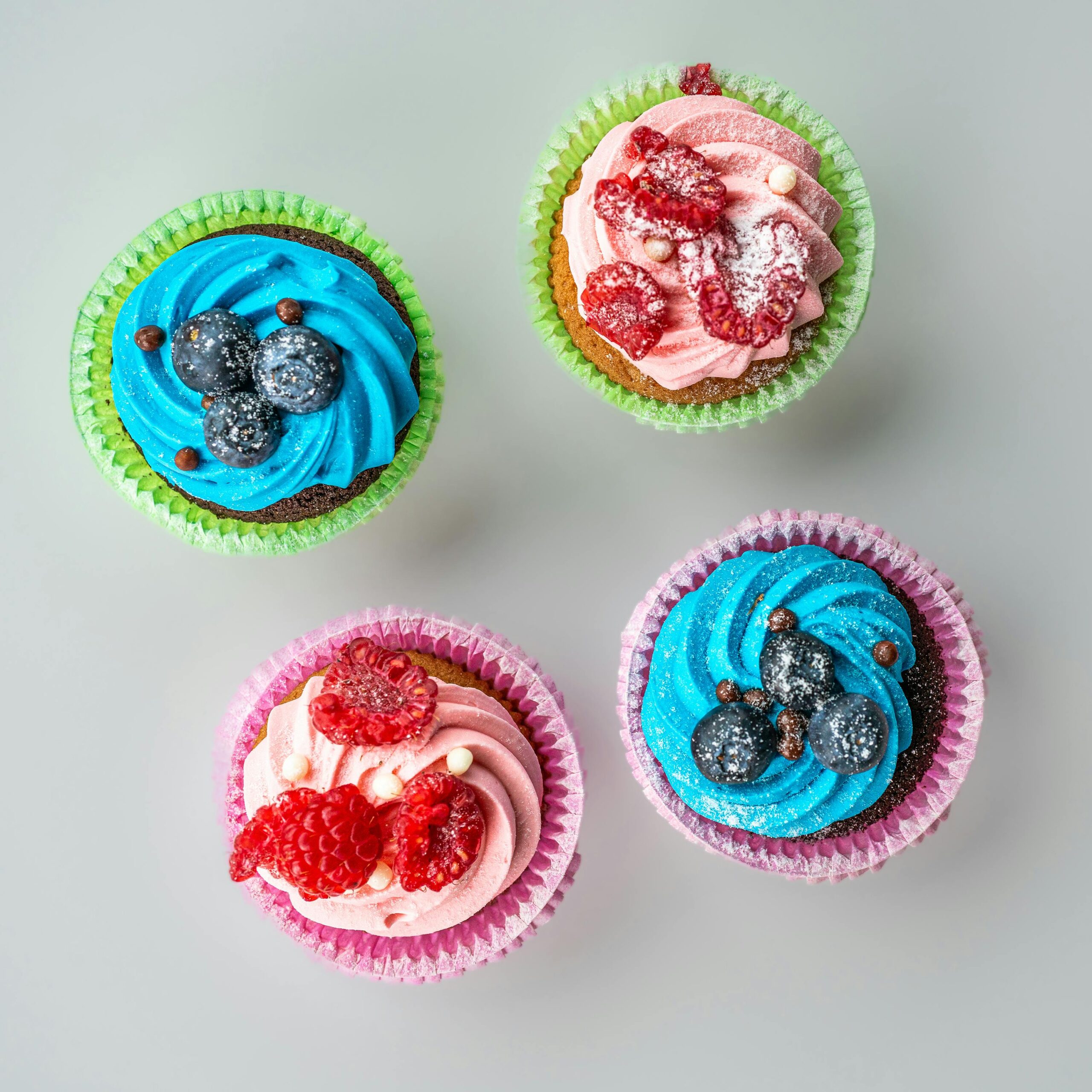
- Dyed bakery icing and cake mix — even at “natural” grocery chains
- Pickles — sounds wild, but most jarred pickles use Yellow 5
- Maraschino cherries — Red 3 (still on shelves until January 2027)
- Salad dressings — French and Catalina dressings use Red 40 and Yellow 6
- Lemonade and iced tea mixes — almost always
- Frozen “kids’ meals” — yes, even the ones marketed as healthy
The rule I use: if a product is “fun” colored and didn’t need to be, assume there’s dye in it until the label proves otherwise.
How I Talk to My Kids About It
The question I get most often, second only to “what do you feed them” — don’t your kids feel left out?
Honest answer: yes, sometimes they do. They notice the rainbow cupcake their friend has, the colored doritos at school, the bright candy in the party favor bag. We don’t pretend they don’t.
What we do is talk about it — why we eat the way we eat, how those dyes actually affect their bodies, and why eating real food now matters for the long-term. They’re old enough to get it, and the more we have those conversations, the less it feels like missing out and the more it feels like a decision our family made on purpose.
Birthday parties: I bring a clean version of whatever’s served. Cupcakes, cookies, a bag of clean candy. Nobody notices, nobody comments, my kids don’t feel weird.
School parties: most of their teachers know us by now and quietly swap the rainbow candy for ones that I have preapproved. The ones who don’t, I send my own.
Sleepovers: snack box from home. Always.
It’s not strict parenting. It’s just where years of label reading landed us. Once you’ve lived it for a year or two, it stops feeling like work and starts feeling like normal life.
Don’t Wait for the FDA — Start Here
If this is the first time you’ve thought about it, don’t try to overhaul your whole pantry tonight. Here’s a three-step starter that actually sticks:
1. Pick one category from the swap list above. Just one. Yogurt is a great place to start because it’s high-dye and easy to swap. Cereal is another good one if it’s the first thing your kids eat every day.
2. Do a label audit on what’s already in your house. Open the cabinet, read the ingredient labels, and pull anything with Red 40, Yellow 5, Yellow 6, Blue 1, Blue 2, Green 3, Red 3, or any “color added” listed without a name. Box it up, give it away, or finish what’s open and don’t replace it.
3. Swap one item this week. Buy the cleaner version of the thing you’re already buying. Don’t try to swap five things. Just one.
Come back next week and pick the next category. By the end of two months, you’ll have rebuilt the pantry without ever feeling like you were on a diet, on a cleanse, or in restriction mode.
That’s how every clean-living mom I know has actually done this. One swap at a time. No drama, no perfection, no waiting on the FDA.
Did this swap list help? Drop a comment and tell me which category you’re tackling first — and if there’s a swap I missed, leave it for the rest of us.
This post contains affiliate links. If you purchase through my links I may earn a small commission at no extra cost to you.
Ready to clean up your kitchen, bathroom, and cleaning cabinet — without the overwhelm? Our Clean Living Bundle gives you the cheat sheets and week-by-week guide to swap out the worst offenders at your own pace. No guilt, no perfection required — just real progress. [Get the Bundle]
For more real food and clean living resources, visit www.therealcleanliving.com
Disclaimer: This article is for informational purposes only and is not intended to diagnose, treat, cure, or prevent any disease. Always consult with your healthcare provider before making significant changes to your diet, especially if you have underlying health conditions. This article may contain affiliate links to products we recommend.
Real Food. Clean Products. No Confusion.
The Real Clean Living
www.therealcleanliving.com