 Skip to content
THE REAL CLEAN LIVING
www.therealcleanliving.com
This post contains affiliate links. If you purchase through my links I may earn a small commission at no extra cost to you.
My kids couldn’t eat dairy for a long time. Like, at all. They were highly allergic — and it wasn’t until we went through the GAPS protocol and healed their guts that dairy slowly came back into our lives. Even then, I didn’t trust what was on the shelves — so I made our yogurt at home for a long time.
Eventually life got busy and I stopped making it myself. But after everything we went through to heal my kids’ guts, I wasn’t about to grab just any yogurt off the shelf. I started reading labels, and what I found in most of those containers honestly made me glad I’d been making my own all along.
Now I buy plain organic grassfed whole milk Greek yogurt — and that’s it. No flavored cups, no kids’ yogurt with cartoon characters, none of it.
Here’s why most store-bought yogurt is junk and what to look for when you’re buying the real thing.
What’s Really in Most Store-Bought Yogurt
When you actually flip the container over and read the ingredients — not the marketing on the front, the actual ingredient list — most yogurt is not what you think it is.
Added sugar is usually the second or third ingredient. A lot of popular brands have 15 to 25 grams per serving. That’s 4 to 6 teaspoons in one little cup. Some of the kids’ yogurts are even worse. After everything we went through to get my kids’ guts healthy, handing them what amounts to dessert with a probiotic sticker on it was never going to happen.
Thickeners and stabilizers like cornstarch, modified food starch, pectin, carrageenan, and gelatin are in there to fake a thick, creamy texture. Real yogurt made from quality grassfed milk doesn’t need any of that. If they’re adding five ingredients just to get the texture right, that tells you everything about what you’re starting with.
Artificial and “natural” flavors show up in almost everything. That strawberry yogurt? Good chance no real strawberry was involved. And “natural flavors” sounds clean but can mean almost anything — companies aren’t required to tell you what’s actually in it.
Most yogurt on the shelf is processed food dressed up as health food. Once you see it, you can’t go back to not seeing it.
Why This Matters for Gut Health (Especially for Our Kids)
This one is really personal for me. After going through GAPS with my kids and watching their bodies heal — watching them go from not being able to tolerate dairy at all to thriving — I’m very protective of what goes into their guts. We worked too hard to get here.
The whole reason most of us reach for yogurt is gut health. It’s fermented, it has probiotics, it should support a healthy microbiome. And it absolutely can — when it’s actually clean.
But sugar feeds the bad bacteria in your gut. So yogurt loaded with added sugar is feeding the exact microbes you’re trying to keep in check. For kids — especially kids who’ve had gut issues or food sensitivities — this matters even more. What they eat now is building the foundation for their gut health long-term.
Thickeners like carrageenan have been linked to gut inflammation in studies. And here’s the part that really got me — carrageenan is banned in infant formula in the EU. But it still shows up in yogurt marketed to kids right here in the U.S.
If we’re buying yogurt for the gut benefits, we need to make sure those benefits actually survive the ingredient list.
What I Look for on the Label
After making my own yogurt for so long, I know what real yogurt looks like — so reading labels became pretty straightforward. Here’s my checklist when I’m in the dairy aisle.
Keep the ingredient list short. I want to see organic grassfed whole milk and live active cultures. That’s basically it. Maybe one more ingredient if it’s a specific probiotic strain. If the list goes past five ingredients, it goes back on the shelf.
Grassfed and organic matter. Conventional dairy can carry residues from antibiotics, hormones, and pesticides — all of which mess with your gut microbiome. Grassfed milk has a better fatty acid profile too. After what we went through healing my kids’ guts, I’m not introducing any of that back in.
Full fat, whole milk. Low-fat and fat-free yogurts almost always compensate with more sugar and more additives. The fat isn’t the problem — it actually helps your body absorb fat-soluble vitamins and keeps you and your kids full longer. We need the healthy fats. Don’t be afraid of them.
Watch the sugar number. Plain yogurt still has some natural sugar from the milk (lactose), usually around 4 to 7 grams. That’s fine — it’s naturally occurring. What I’m watching for is added sugar. If the label shows 12 or more grams and the ingredients include cane sugar, fructose, or any sweetener, it’s going back.
Look for “live and active cultures.” This means the probiotics are actually alive. Some yogurts are heat-treated after fermentation, which kills the good bacteria. That defeats the entire point of eating yogurt.
Greek yogurt specifically. This is what I buy — plain organic grassfed whole milk Greek yogurt. It’s strained, so it’s naturally thicker and higher in protein without needing all those thickeners and stabilizers. The texture is already there because of how it’s made, not because of what they added to it.
The Clean Swap: Plain Organic Grassfed Greek Yogurt + Raw Honey
This is the swap that works for our family.
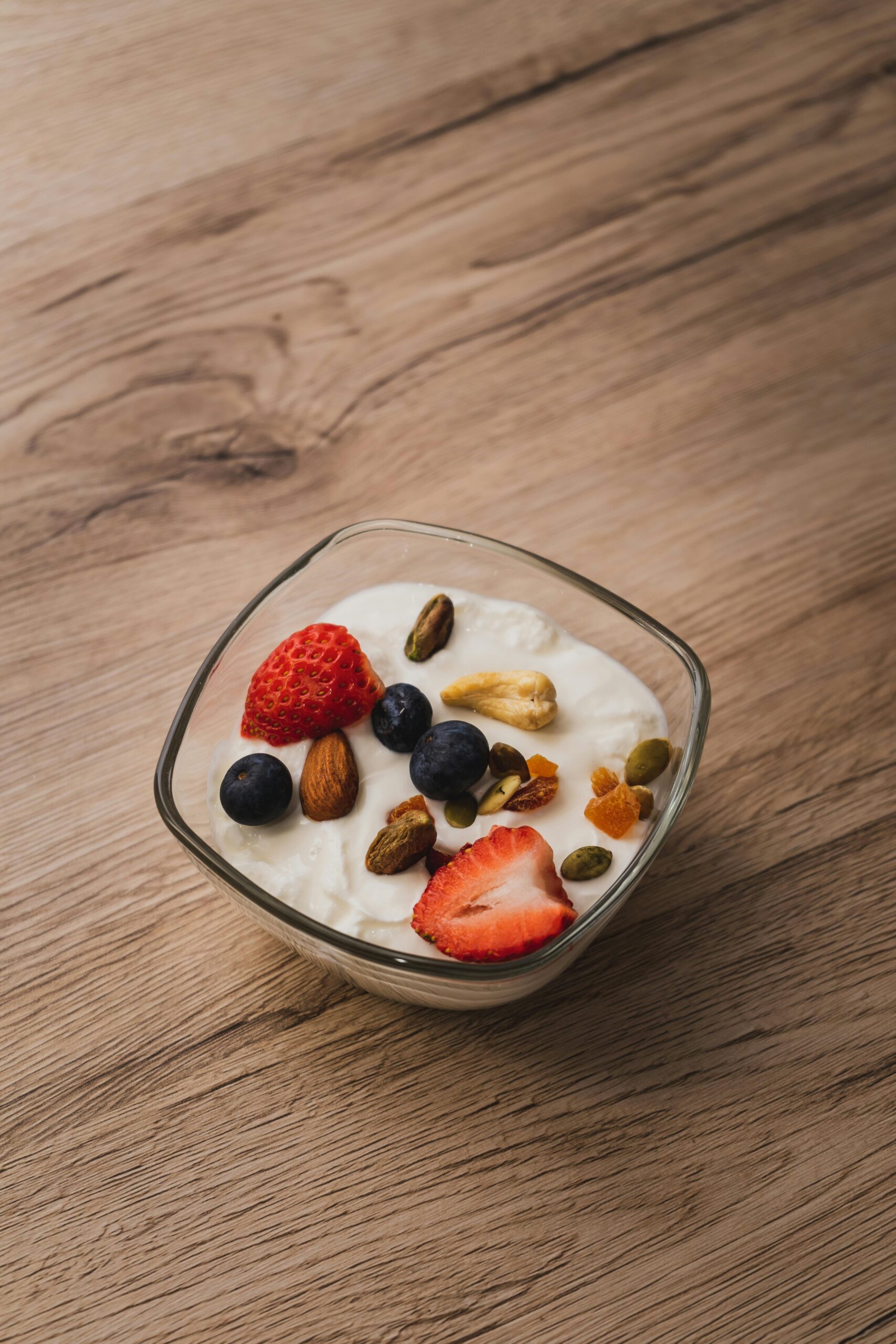
Plain organic grassfed whole milk Greek yogurt, sweetened at home with a drizzle of raw honey.
That’s it. No flavored cups. No squeezy tubes. No cartoon characters on the label.
The yogurt gives you the probiotics, the protein, and the healthy fats without any of the junk. Raw honey brings natural sweetness plus its own enzymes and antimicrobial properties — so it’s actually supporting your gut instead of working against it.
For the kids, I stir in fresh berries, a little cinnamon, or some homemade granola. They love it. They get the sweetness they want, I know exactly what’s going into their bodies, and nobody’s gut is paying the price for convenience.
A few brands I’ve liked: Stonyfield Organic, Maple Hill, and Organic Valley all make solid plain whole milk Greek options. Check what’s available near you and still read the label — even the good brands change their formulations sometimes.
And a bonus — a big tub of plain Greek yogurt is almost always cheaper per serving than those individual flavored cups. Better for their guts and easier on your grocery budget.
Don’t Let the Packaging Fool You
The yogurt aisle is full of really convincing marketing. “Protein-packed.” “Probiotic.” “Heart-healthy.” “Kid-approved.” It all sounds great on the front of the package. But the front is designed to sell you something. The ingredient list on the back is where the truth is.
My rule is simple: if the front of the package is working really hard to convince me it’s healthy, I look extra carefully at the back. Real clean food doesn’t need a marketing campaign. It just needs a short ingredient list and a spot in the fridge.
I’ve started teaching my kids to read labels with me too. After everything our family went through with food, I want them to understand why this matters — not just take my word for it. Even young kids can start recognizing things like “artificial flavor” or noticing when an ingredient list is way too long. It’s a small habit that sets them up to make their own good choices as they grow.
The Bottom Line
Most store-bought yogurt isn’t the health food it pretends to be. The sugar, the thickeners, the artificial ingredients — they cancel out the gut benefits we’re all reaching for.
The fix is so simple. Plain organic grassfed whole milk Greek yogurt, sweetened at home with raw honey and real fruit. Better for your gut, better for your kids, and it takes about 30 seconds to put together.
We worked really hard to heal our kids’ guts. If your family is on a similar journey — or you just want to be more intentional about what you’re feeding them — this is one of the easiest swaps to start with.
I’ll be sharing how I used to make our yogurt at home in an upcoming post too — so stay tuned for that one.
Disclaimer: This post is for informational purposes only and is not medical advice. Always consult with your healthcare provider about dietary changes for you or your children.
This article is for informational purposes only and is not intended as medical advice. Always consult with your healthcare provider before starting any supplement, especially for children or if you are pregnant, nursing, or taking medications. The Real Clean Living is not responsible for any actions taken based on the information provided.
Ready to clean up your kitchen, bathroom, and cleaning cabinet — without the overwhelm? Our Clean Living Bundle gives you the cheat sheets and week-by-week guide to swap out the worst offenders at your own pace. No guilt, no perfection required — just real progress. [Get the Bundle]
Real Food. Clean Products. No Confusion.