 Skip to content
THE REAL CLEAN LIVING
www.therealcleanliving.com
This post contains affiliate links. If you purchase through my links I may earn a small commission at no extra cost to you.
When we started our GAPS journey — 14 months of healing my kids’ guts from food allergies and dairy sensitivities — I became the mama who reads every single label. Every condiment, every snack, every jar. If it went into our bodies, I needed to know what was actually in it.
Pasta sauce was one of those things I never even thought to question. Tomatoes, basil, garlic — it seemed like one of the safe ones. Until I flipped the jar over.
And there it was. Sugar. Seed oils. “Natural flavors.” Citric acid. Ingredients that had no business being in something that should just be tomatoes and seasoning. That was the day jarred pasta sauce quietly became another thing I stopped buying.
The thing is, homemade pasta sauce is one of the easiest swaps you can make. It takes about five minutes, costs less than most jars, and you actually know what’s in it. No chemistry degree required.
What’s Hiding in Store-Bought Pasta Sauce
Most people assume pasta sauce is just tomatoes and herbs. But flip over a jar of the popular brands and you’ll find a list that tells a different story.
Sugar — sometimes listed as cane sugar, sometimes just sugar. Some brands have 6 to 12 grams per serving. That’s per half cup. Most people use way more than half a cup. You’re basically pouring sweetened tomato syrup over your pasta.
Soybean oil or canola oil — inflammatory seed oils that have no reason to be in pasta sauce. They’re cheap filler. That’s it.
“Natural flavors” — two words that can hide dozens of undisclosed chemical compounds. If you’ve read my article on what natural flavors actually means, you know this is one of the most misleading terms on any label.
Citric acid — sounds harmless, but the version used in processed food is typically derived from black mold (Aspergillus niger) and corn. Not exactly what you picture when you think “citrus.”
Modified food starch, xanthan gum, calcium chloride — thickeners and preservatives that exist for shelf life and texture, not for your family’s health.
None of these ingredients make the sauce taste better. None of them make it more nutritious. They’re there for cost, shelf stability, and mouthfeel. That’s it.
The Clean Swap (And Why It Works)
Here’s what I figured out after making this swap: homemade pasta sauce is actually easier than most people think. You don’t need a recipe handed down from an Italian grandmother. You don’t need to simmer anything for hours. You need a jar of good crushed tomatoes, a few seasonings, and about five minutes.
The key is starting with organic crushed tomatoes — check the label and make sure the only ingredients are tomatoes and maybe some salt. That’s your base. Everything else is just seasoning to taste. If you can find them in glass jars instead of cans, grab those. Tomatoes are highly acidic, and acidic foods can leach chemicals like BPA from can linings into the food. Glass is always the cleaner option.
This is real cooking, not a test kitchen. The measurements are approximate because that’s how food is supposed to work. You taste it, adjust, and make it yours. No measuring spoons required.
The Recipe
Homemade Clean Pasta Sauce
Ingredients (all approximate — adjust to your taste):
• 1 jar crushed organic tomatoes (glass-jarred if possible — see Pro Tips)
• 1–2 tbsp organic tomato paste
• Italian seasoning to taste
• Fresh garlic or garlic powder to taste
• Onion powder to taste
• Honey to taste
Directions:
Pour the crushed tomatoes into a pot. Stir in the tomato paste, Italian seasoning, garlic, onion powder, and a small drizzle of honey. Warm it on low to medium heat while you stir everything together. Taste and adjust. That’s literally it.
For a smoother sauce, blend with a hand blender right in the pot. If you’re using a regular blender, blend before heating or let the sauce cool down first. Never pour hot sauce into a plastic blender — it can leach chemicals and it’s a burn risk. Just don’t do it.
Pro Tips
Blend in cottage cheese for a creamy, high-protein tomato sauce. This sounds strange but it’s one of those things that just works. The cottage cheese melts into the sauce when you blend it and gives it this rich, creamy texture with a serious protein boost. My kids have no idea it’s in there.
Double the batch and freeze half. This sauce stores well in glass jars or silicone freezer bags. Make it once, eat it twice. That’s how real meal prep works.
Use the best crushed tomatoes you can find. The sauce is only as good as your base. I look for organic, and I check the ingredients — it should just be tomatoes and salt. If there’s citric acid, calcium chloride, or anything else in there, grab a different brand.
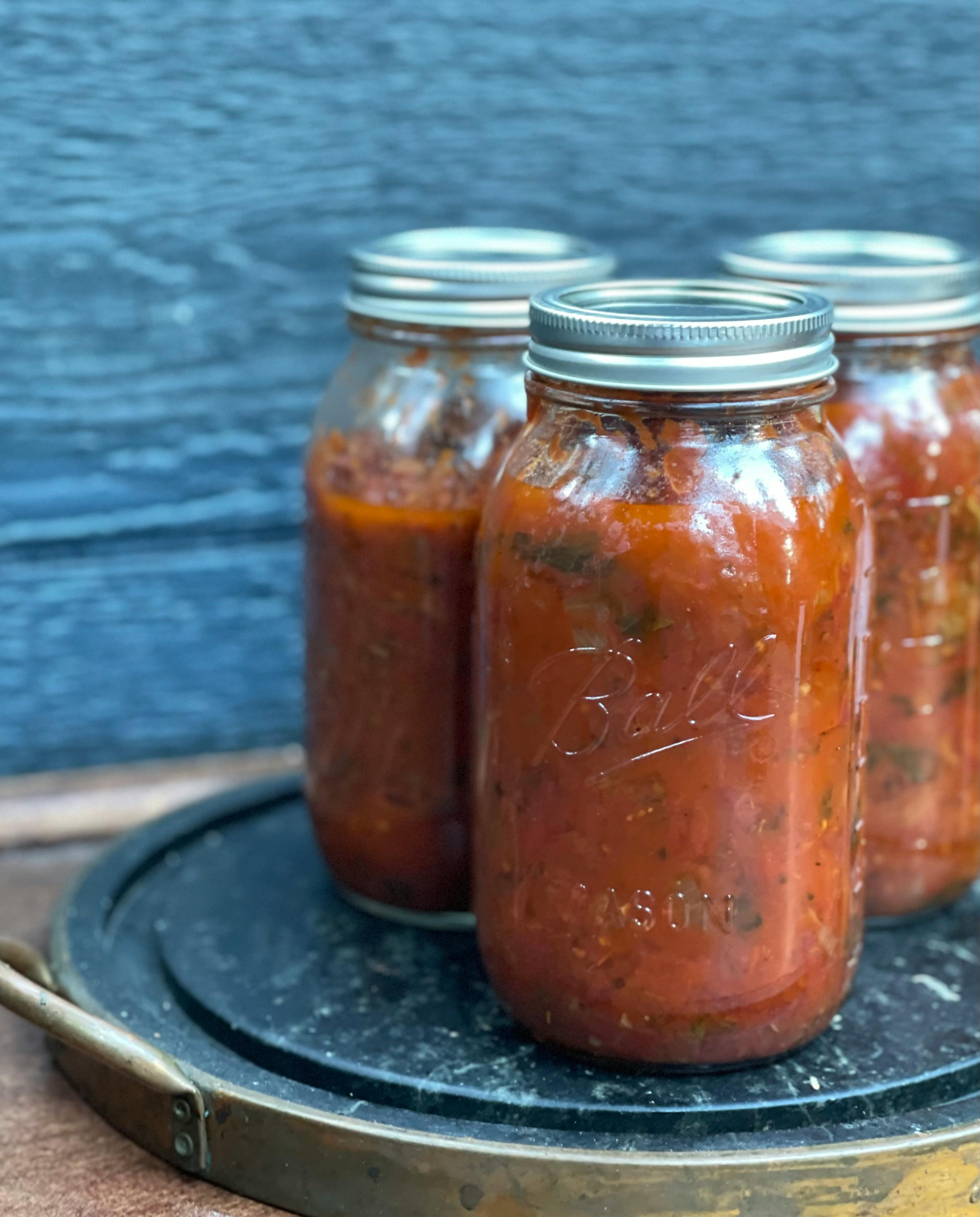
Choose glass-jarred tomatoes over canned when you can. Tomatoes are one of the most acidic foods in your pantry, and that acidity can cause chemicals from can linings — including BPA and its replacements — to leach into the food. This is especially true for tomatoes that sit in those cans for months. Glass doesn’t have that problem. It’s one of those small swaps that makes a real difference over time.
How We Serve It
Our go-to: brown ground beef in a pan, add it to the sauce, and serve it over organic chickpea pasta. The chickpea pasta gives you extra protein and fiber, and it holds up to a meat sauce without getting mushy. My kids eat it without complaint, which is the only endorsement that actually matters in this house.
We also use this sauce for homemade pizza, dipping bread, or just as a base for whatever else we’re making that week. Once you have a clean sauce in the fridge, it gets used in everything.
The Bottom Line
You don’t need to buy pasta sauce with 15 ingredients when you can make it with 6. It’s cheaper, it’s cleaner, and it takes less time than most people think. This was one of the simplest swaps we made in our kitchen, and it’s one we’ll never go back on.
If you’re just getting started with clean eating — or even if you’ve been at it for a while and haven’t tackled the pasta sauce jar yet — start here. One swap. Real ingredients. No confusion.
For more clean swaps and real food recipes, visit therealcleanliving.com.
Medical Disclaimer
This article is for informational purposes only and is not intended as medical advice. Always consult with your healthcare provider before making changes to your diet, especially if you or your family members have food allergies, sensitivities, or medical conditions. The Real Clean Living is not responsible for any adverse reactions or health outcomes resulting from the information shared here.
This article is for informational purposes only and is not intended as medical advice. Always consult with your healthcare provider before starting any supplement, especially for children or if you are pregnant, nursing, or taking medications. The Real Clean Living is not responsible for any actions taken based on the information provided.
Ready to clean up your kitchen, bathroom, and cleaning cabinet — without the overwhelm? Our Clean Living Bundle gives you the cheat sheets and week-by-week guide to swap out the worst offenders at your own pace. No guilt, no perfection required — just real progress. [Get the Bundle]
Real Food. Clean Products. No Confusion.