 Skip to content
THE REAL CLEAN LIVING
www.therealcleanliving.com
This post contains affiliate links. If you purchase through my links I may earn a small commission at no extra cost to you.
I’m not someone who reaches for medicine at the first sign of a fever. Honestly, I’d rather let my kids’ bodies do what they’re designed to do and ride it out when we can. But there are times when your kid needs help — when the pain is too much or a fever just won’t quit — and in those moments, you want something in the cabinet you actually feel good about giving them.
For a long time, Tylenol was the default. It’s what the hospital sent us home with. It’s what sat in every medicine cabinet I’d ever seen. I never questioned it — until I did what I always do now. I flipped the bottle over and read the actual ingredient list. And there it was. The same junk I’d been eliminating from our food was sitting right there in the medicine I was giving my kids when they felt the worst.
If you’re cleaning up your pantry, your cleaning supplies, and your personal care products, it’s time to look at the medicine cabinet too. This was one of the easiest swaps we’ve made.
What’s Actually in Children’s Tylenol?
The active ingredient in Children’s Tylenol is acetaminophen. That’s the part that reduces fever and relieves pain. No argument there — it does its job. The problem is what comes along for the ride.
Check the inactive ingredients on the back of a bottle of Children’s Tylenol and you’ll find:
- Artificial dyes — FD&C Red 40 is a staple in the grape and berry flavors. It’s petroleum-derived and linked to hyperactivity and behavioral issues in children. Multiple countries have banned it or require warning labels.
- Artificial flavors — lab-created flavoring compounds designed to make medicine taste like candy. These can contain undisclosed chemicals under the “flavor” umbrella.
- High fructose corn syrup or sucralose — processed sweeteners that we’d never knowingly put in our kids’ food.
- Sodium benzoate — a preservative that can form benzene (a carcinogen) when combined with certain acids.
- Propylene glycol — a synthetic compound also used in antifreeze and industrial products. It’s “generally recognized as safe” by the FDA, but that doesn’t mean I want it in my kid’s pain reliever.
None of these ingredients help reduce your child’s fever. None of them relieve pain. They’re there for color, flavor, shelf life, and texture. That’s it.
Why This Matters — Especially for Kids
Think about when you’re giving your kid Tylenol. They’re already sick. They have a fever, they’re in pain, their body is already working overtime to fight something off. Their immune system is activated and their little body is vulnerable.
That’s the moment you’re adding artificial dyes, synthetic preservatives, and processed sweeteners to the mix. When their body is at its weakest, you’re asking it to process ingredients that don’t belong there in the first place.
Kids’ bodies are still developing. They’re smaller, they metabolize things differently, and they’re more sensitive to what goes in. We wouldn’t put Red 40 in their smoothie. We shouldn’t have to accept it in their fever medicine.
What Is Genexa Pain & Fever Relief and Why It’s Different
Genexa was founded by two dads who were frustrated by the same thing — why does medicine need artificial junk to work? Their answer: it doesn’t. They created a line of clean medicine with the same active ingredients that actually do the job, without the unnecessary fillers.
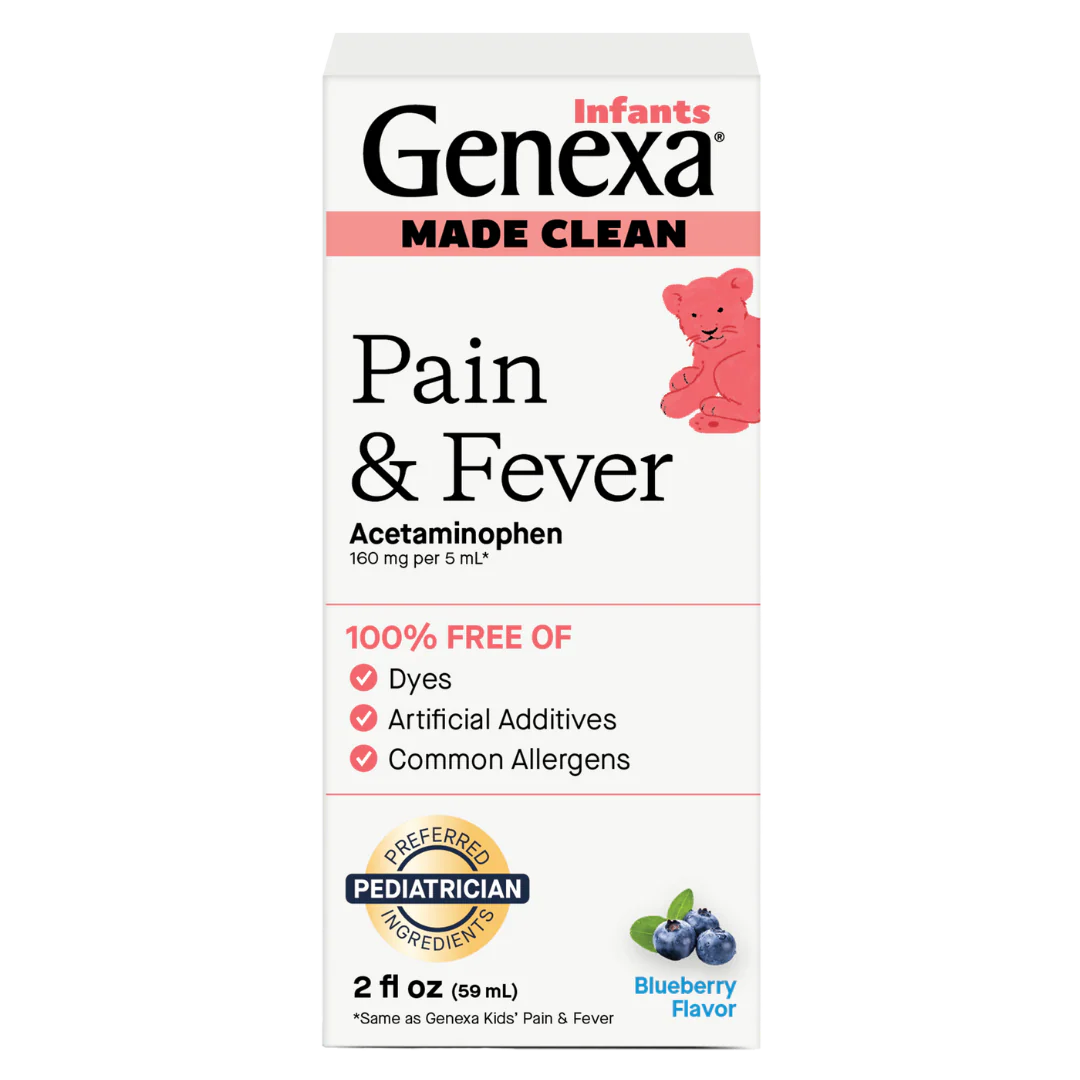
Genexa Kids’ Pain & Fever Relief uses acetaminophen — the same active ingredient as Children’s Tylenol. Same dosing, same purpose. The difference is everything else. No artificial dyes. No artificial sweeteners. No artificial flavors. No parabens. No common allergens.
This isn’t some herbal remedy or unproven alternative. It’s real, FDA-compliant medicine — made with cleaner inactive ingredients. Your kid gets the pain and fever relief they need without the ingredients they don’t.
How to Make the Swap
This is as straightforward as it gets. Same active ingredient. Same purpose. You’re not changing what the medicine does — you’re just choosing the version without artificial dyes, synthetic sweeteners, and unnecessary fillers.
Genexa is available at Target, Walmart, CVS, Amazon, Whole Foods, and most major retailers. It’s right there on the shelf. Grab the Genexa Kids’ Pain & Fever Relief and swap it in next time you need it.
As always, if your child is on other medications or has specific health conditions, talk to your pediatrician first. The active ingredient is the same, but it’s always smart to keep them in the loop.
The Bottom Line
We read food labels. We check ingredient lists on skincare and cleaning products. The medicine cabinet deserves the same attention. When your kid is sick and you’re reaching for pain relief, you shouldn’t have to wonder why their medicine contains petroleum-derived dyes and antifreeze compounds.
Genexa made this swap simple for our family. Real medicine, clean ingredients, no compromises. One less thing to worry about when your kid doesn’t feel well — and that’s worth everything.
This article is for informational purposes only and is not intended as medical advice. Always consult with your healthcare provider before starting any supplement, especially for children or if you are pregnant, nursing, or taking medications. The Real Clean Living is not responsible for any actions taken based on the information provided.
Ready to clean up your kitchen, bathroom, and cleaning cabinet — without the overwhelm? Our Clean Living Bundle gives you the cheat sheets and week-by-week guide to swap out the worst offenders at your own pace. No guilt, no perfection required — just real progress. [Get the Bundle]
Real Food. Clean Products. No Confusion.